← Portfolio
nearbuy

Web app · 2024

nearbuy

Regional food collaboration — visible, plannable, tradeable.

ReactSaaSB2BE-commerceLogisticsRegional food

Outcome

Live platform for hundreds of businesses — with guided product data, dependable standing orders, and a modern B2B experience.

nearbuy connects producers, processors, logistics partners, and buyers so regional supply becomes visible, plannable, and tradeable in one place.

I redesigned core flows — structured product data sheets, standing orders for recurring supply, and a shared theme system — while improving responsiveness from desktop dashboards down to tablet workflows.

Live across regional supply chains

nearbuy serves hundreds of businesses and community kitchens across regional food networks — with clearer data entry, dependable recurring-order workflows, and an interface that finally feels like a modern B2B platform.

nearbuy — Find partners in your region

Business discovery — list and map on tablet.

Complex data, fragile workflows, dated UI

Regional supply runs on dense product data and long-running agreements — but the tools for both were working against the people maintaining them.

Product data sheets asked producers to dump dozens of fields into one long form — brand, designation, packaging, ingredients, certification — with little guidance and no way to pause without losing progress.

Standing orders were just as brittle. Complex delivery schedules were hard to set up, harder to track, and painful to edit once live — exactly the kind of workflow that erodes trust between buyers and suppliers.

The interface had not kept pace. Low-contrast inputs, tight spacing, and a generic component library made the product feel like stock SaaS rather than infrastructure hundreds of regional businesses rely on every day.

User research for product data, logistics expertise for standing orders

For the product data sheet I ran UX research and internal brainstorming, working closely with stakeholders until the flow felt obvious to the people who would actually maintain the catalogs.

Standing orders were different — I drew on my own logistics background and mapped the system in one focused pass. Customers and stakeholders took to it quickly; it was gratifying to bring domain expertise from an adjacent field straight into the product.

The visual layer got the same discipline: newer libraries, a reworked theme provider, and clear pillars — contrast, white space, and hierarchy — so every screen felt calmer to read and faster to act on.

Guided flows, dependable schedules, a platform that keeps up

Each pain point got a dedicated answer — structured data capture, flexible recurring orders, and a visual system rebuilt for clarity and pace.

Product data sheets packed too much into one screen. Producers needed freedom to work slowly, step by step, without fear of losing what they had already entered.

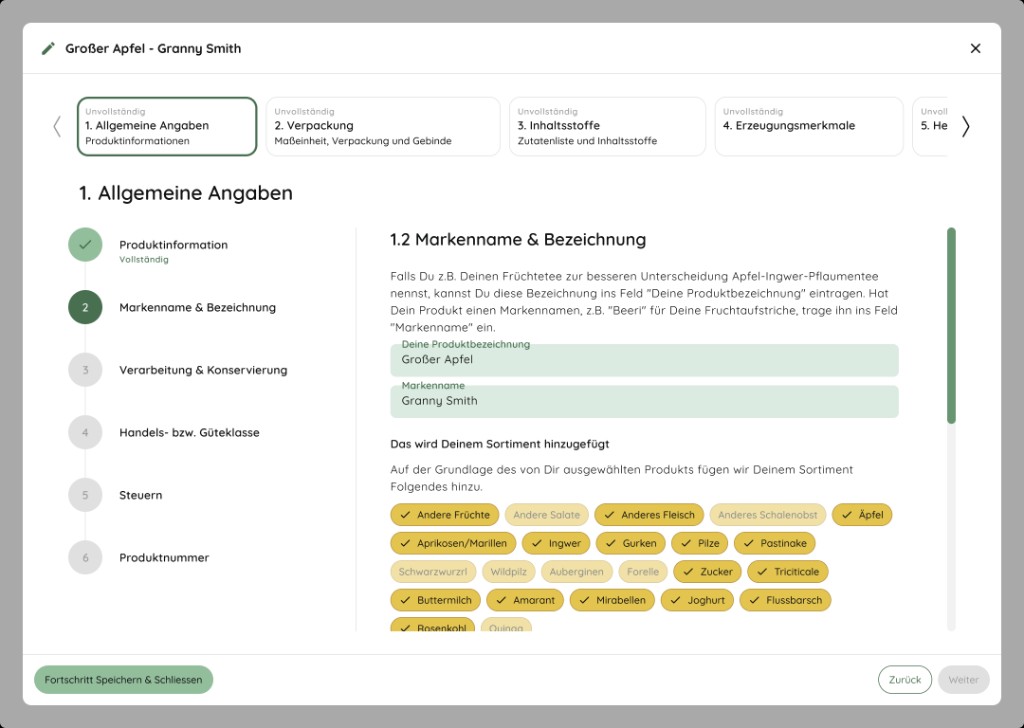
A slick, intuitive multi-step modal breaks the sheet into clear sections, auto-saves as you go, and can be closed at any time — complete freedom to pause, return, and finish on your own schedule.

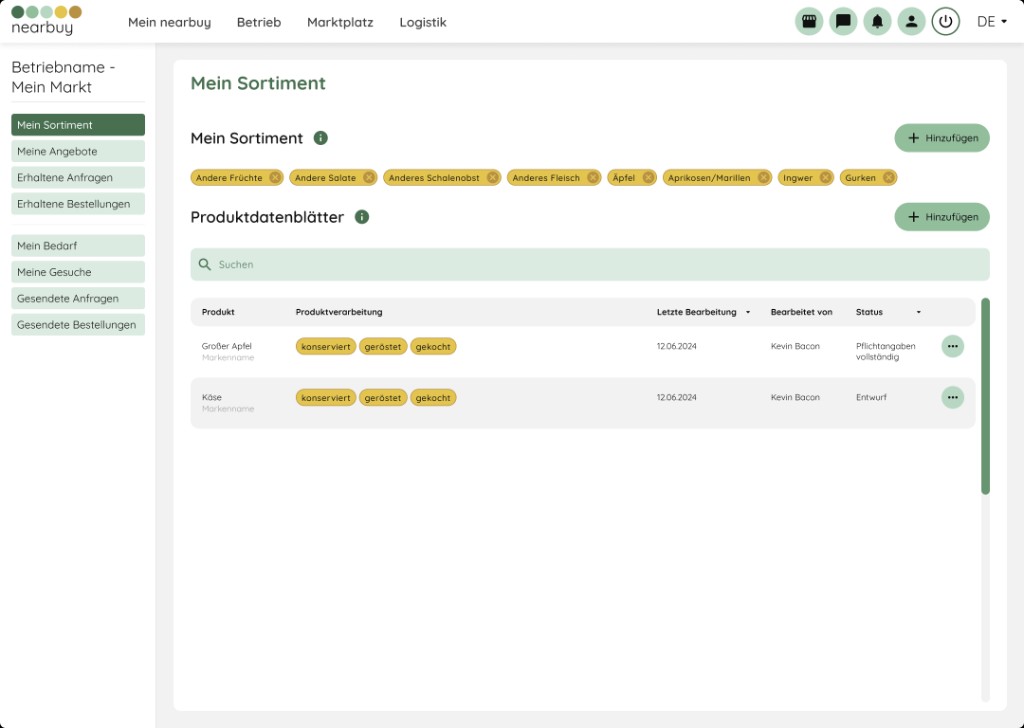
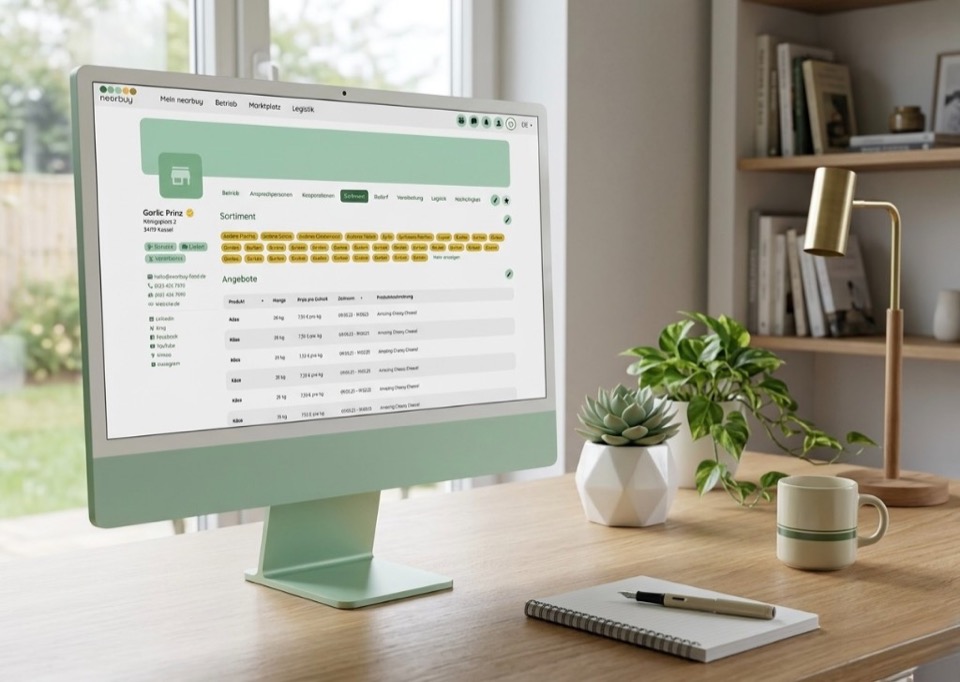
nearbuy — Assortment at a glance

Mein Sortiment — overview before entering product data.

nearbuy — Multi-step product data sheet

Product data sheet — step-by-step with auto-save.

Recurring orders were the operational backbone of the network — but setting up complex schedules, tracking deliveries, and making edits felt risky and opaque.

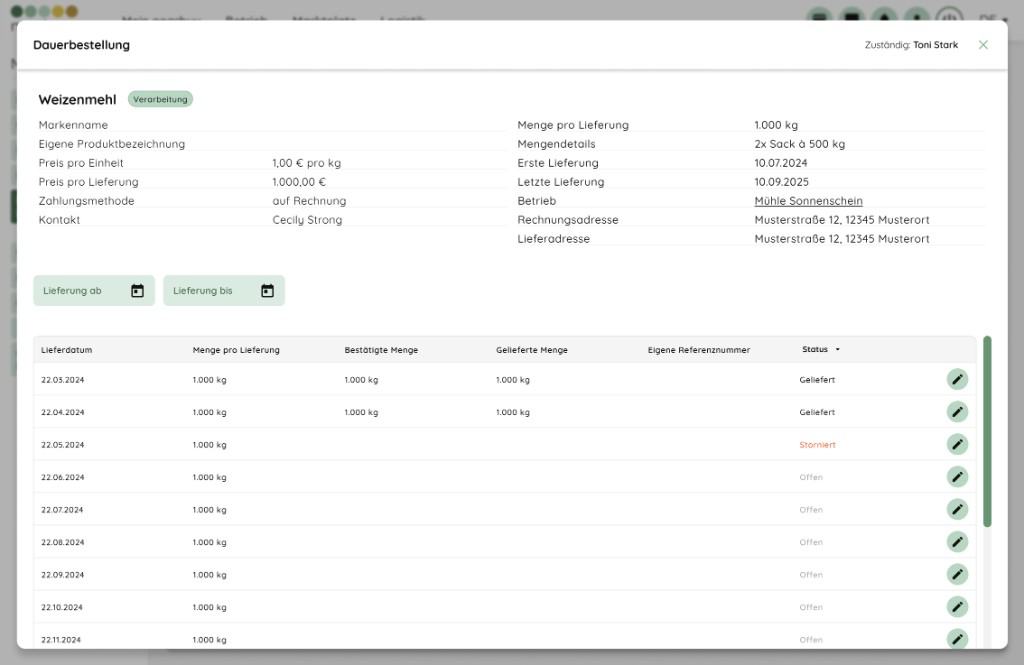
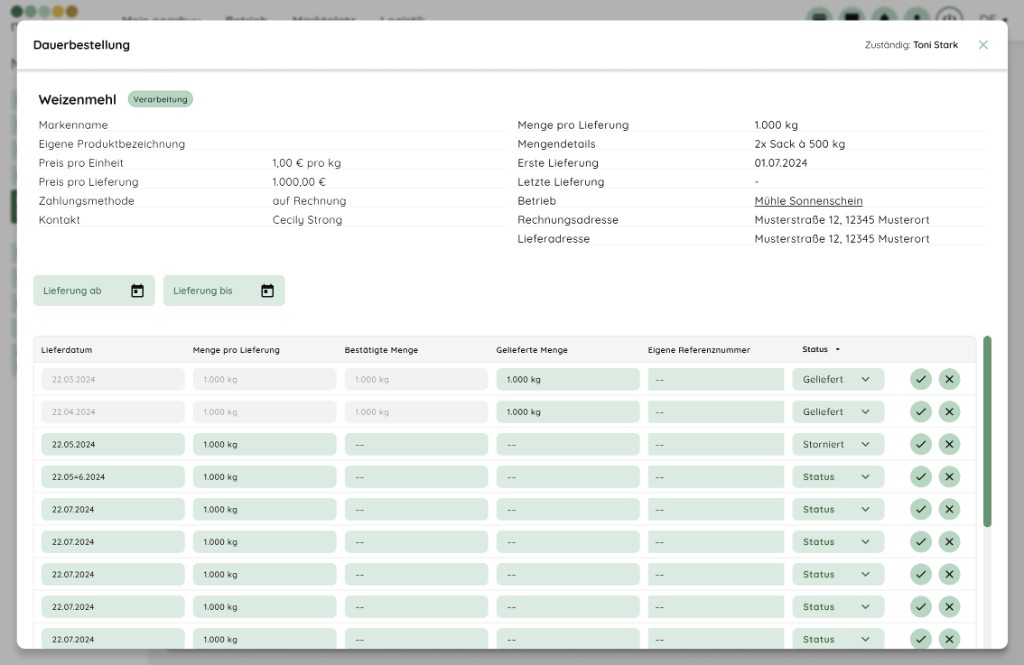
An informative, flexible interface lets users tune standing orders, track each drop, and edit terms with confidence — detail and supplier views side by side, built for the way logistics actually runs.

nearbuy — Standing orders 1
nearbuy — Standing orders 2

Buyer detail and supplier edit — side by side.

The overall product looked and felt outdated — inputs were hard to read, layouts crowded, and the experience fell short of the modern B2B platforms users compare us to.

A reworked theme, stronger contrast, generous white space, and clearer hierarchy raised the whole tactile experience — with snappy, fluid motion that brings nearbuy in line with contemporary regional-market platforms.

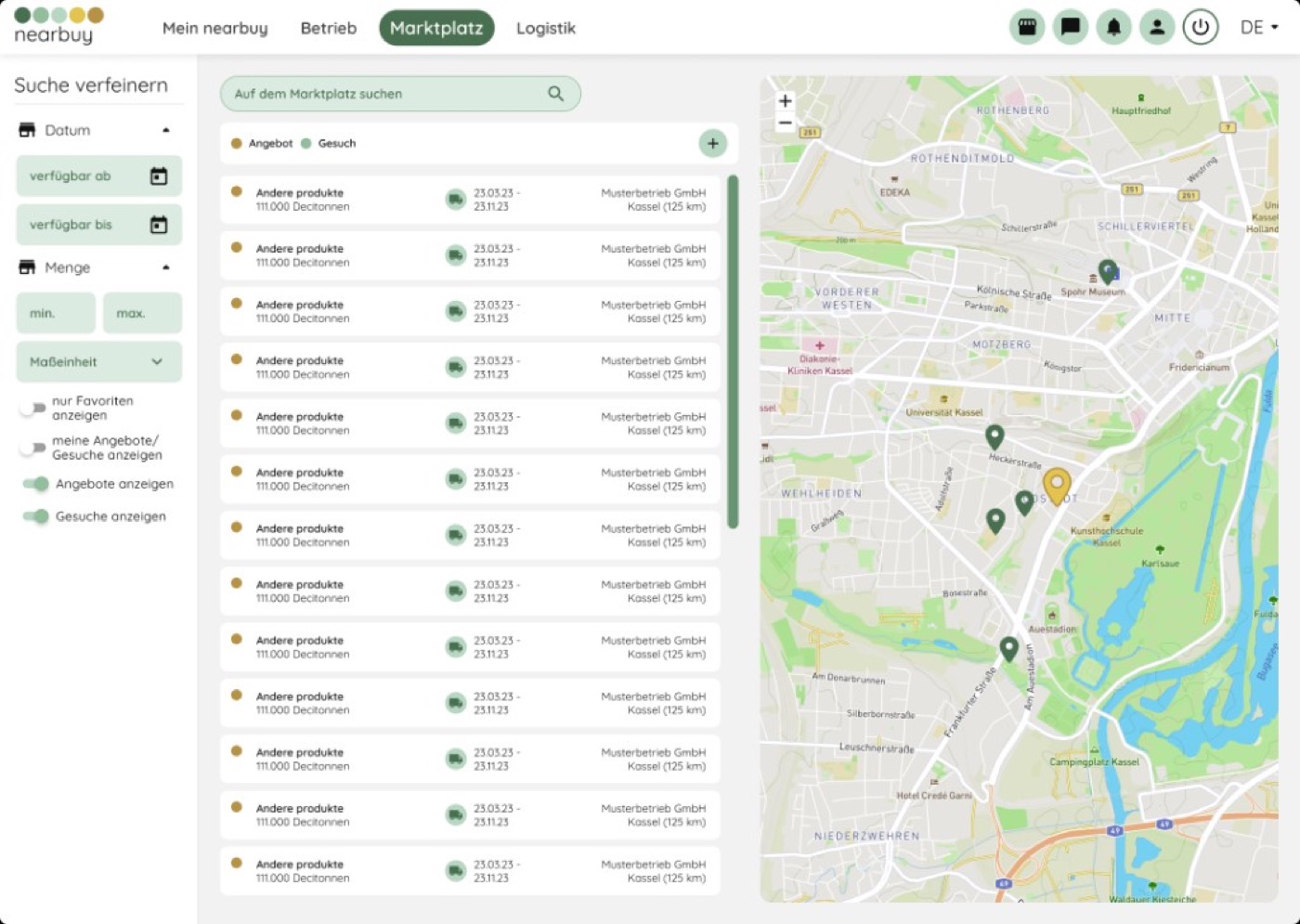
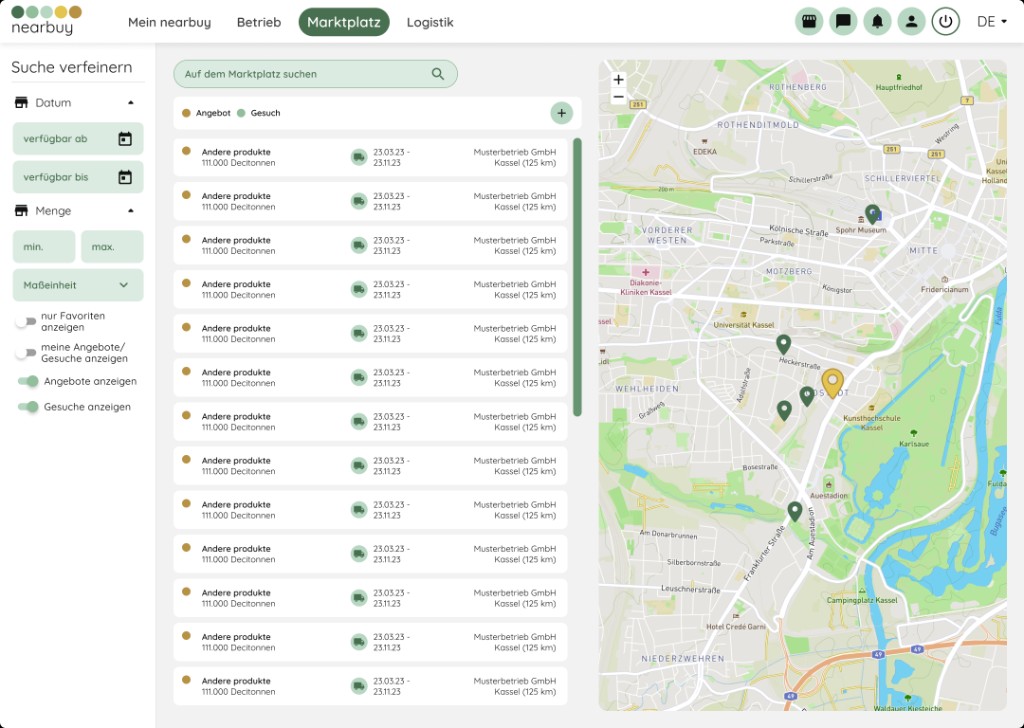
nearbuy — Regional marketplace

Marketplace — offers, requests, and map-based search.

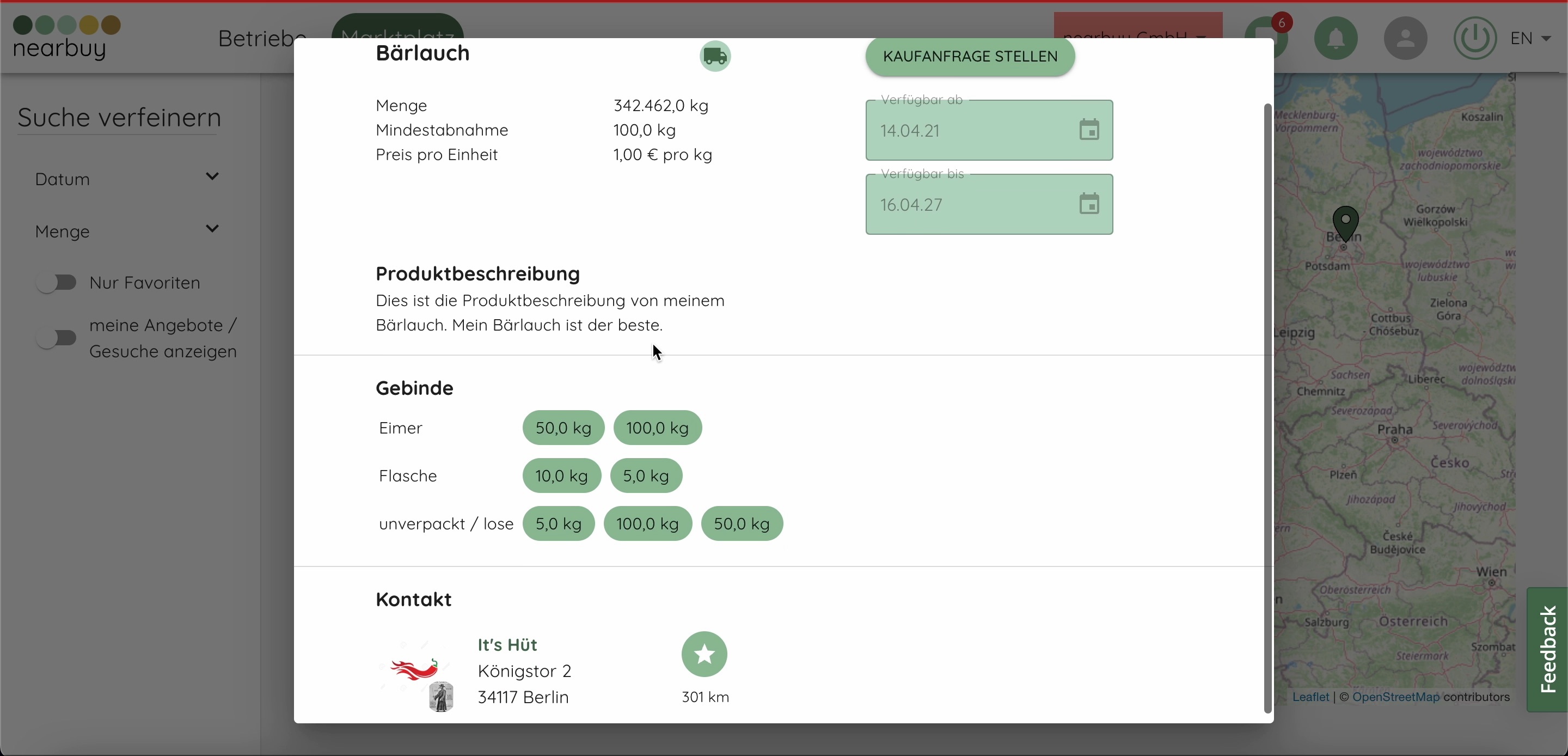
Before
nearbuy — Before and after — offer dialog — before
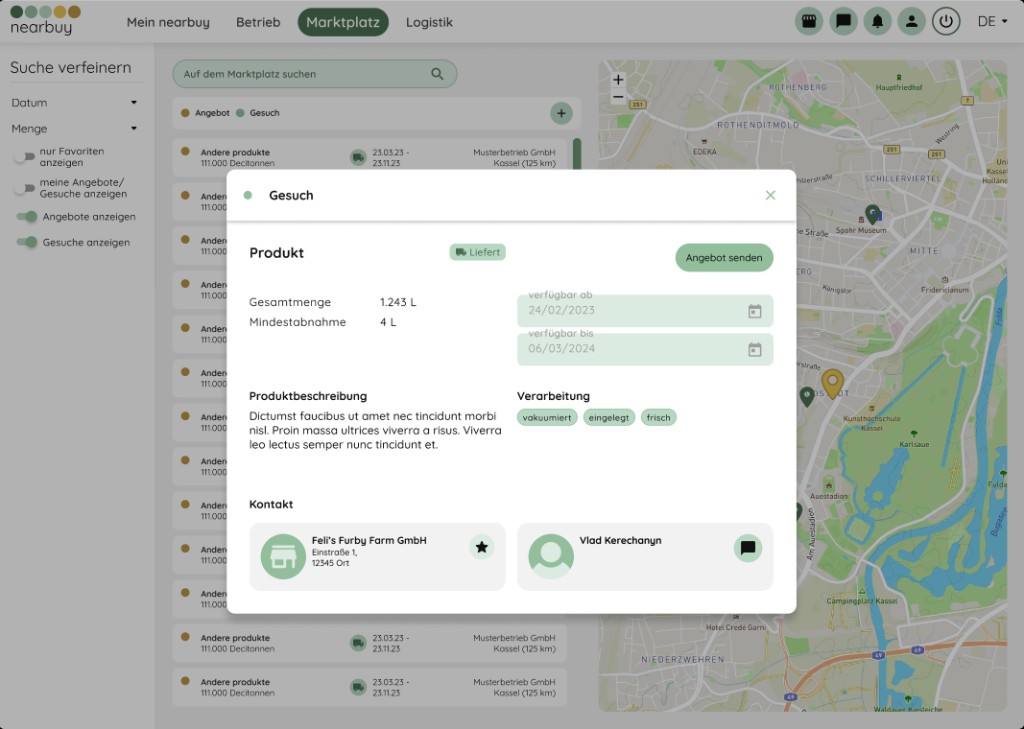
After
nearbuy — Before and after — offer dialog — after

Offer dialog, mid-2022 → after the redesign.

Before
nearbuy — Before and after — marketplace browse — before
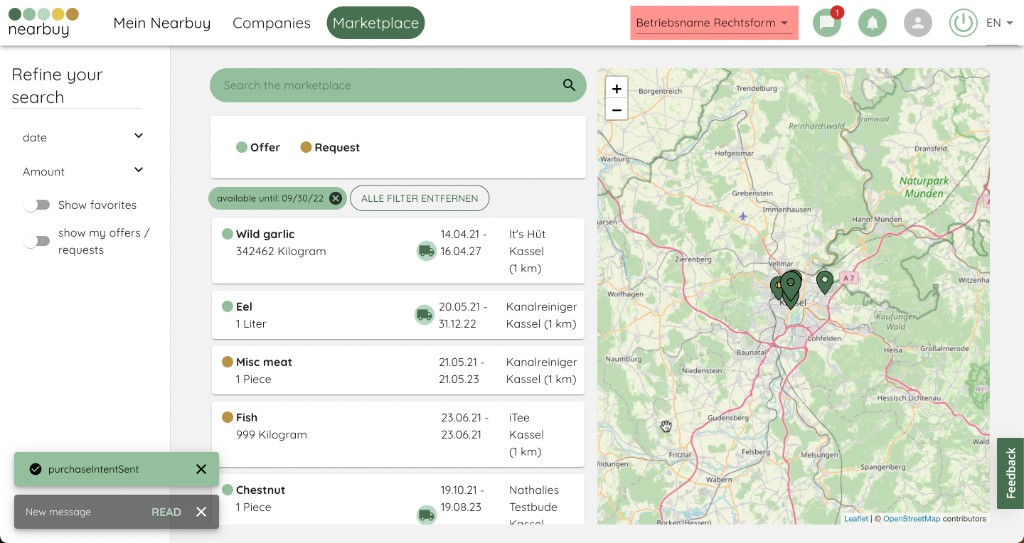
After
nearbuy — Before and after — marketplace browse — after

Marketplace browse, September 2022 → after the redesign.

Built with the network, for the network

nearbuy grew through iterative, user-centred work with producers, bundlers, and kitchens — the product is live because the people who depend on it helped shape what shipped.

Methods

  • UI/UX design
  • Front-end development
  • React
  • Responsive design
  • Design systems
  • Prototyping
  • User flows