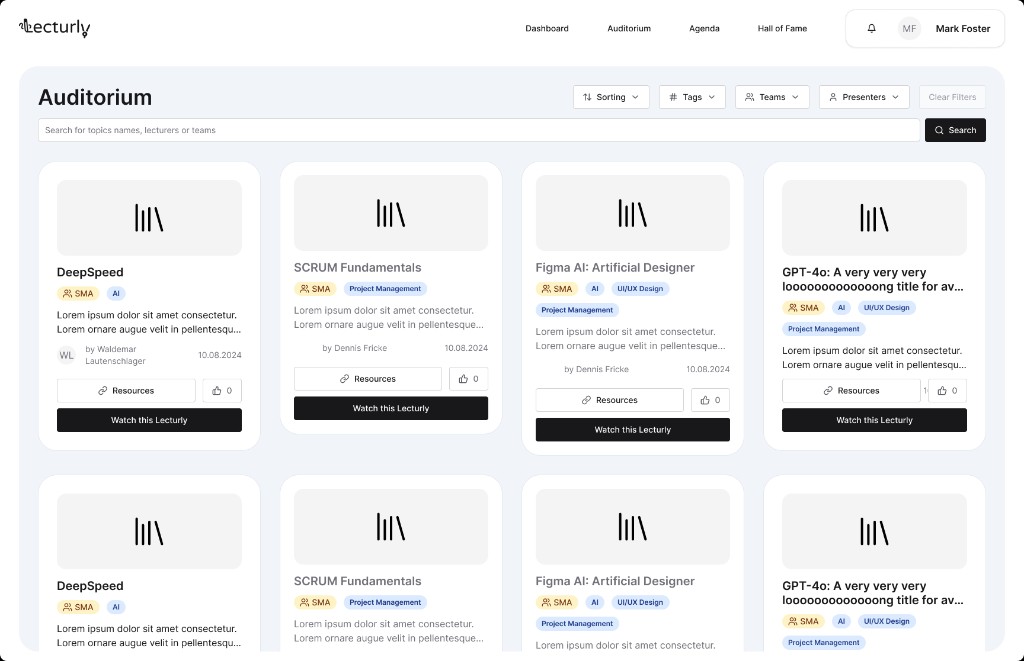
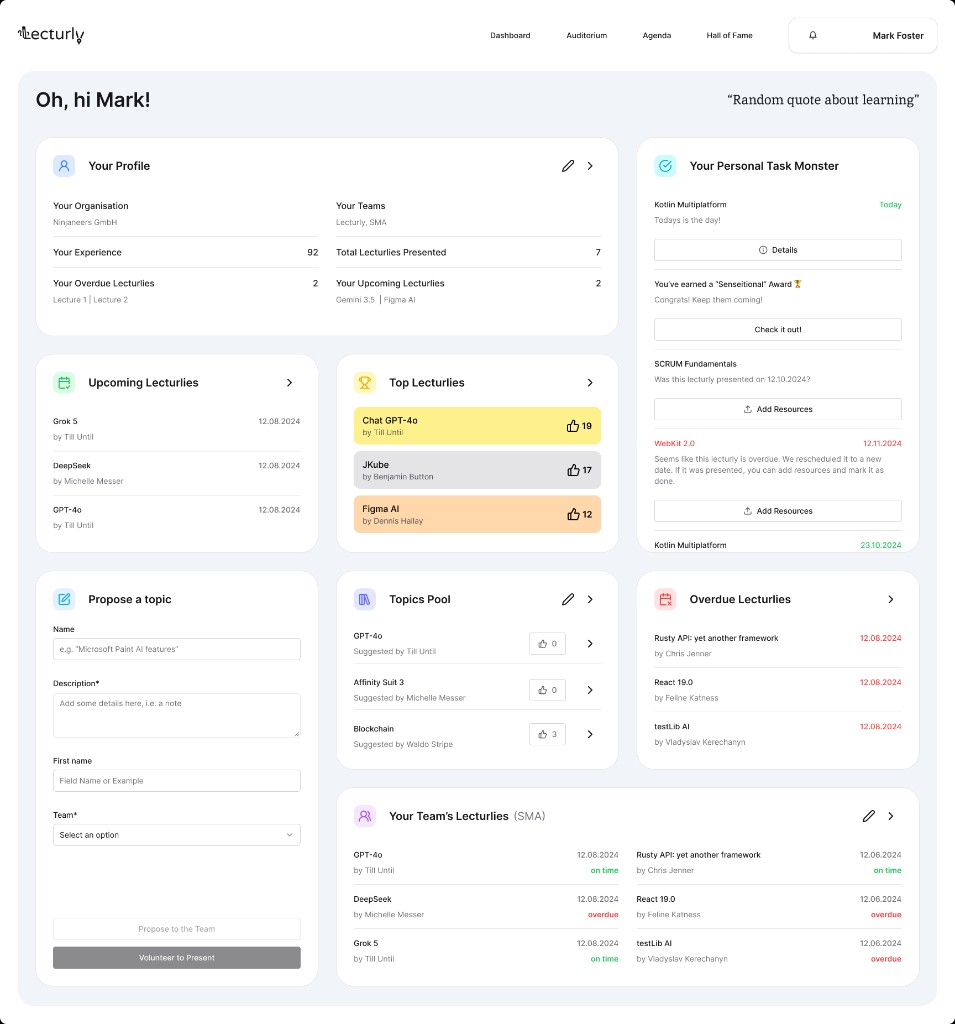
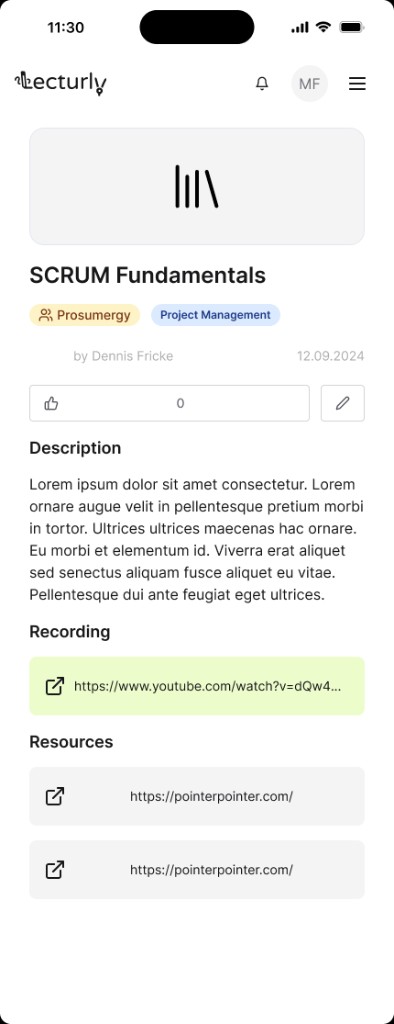
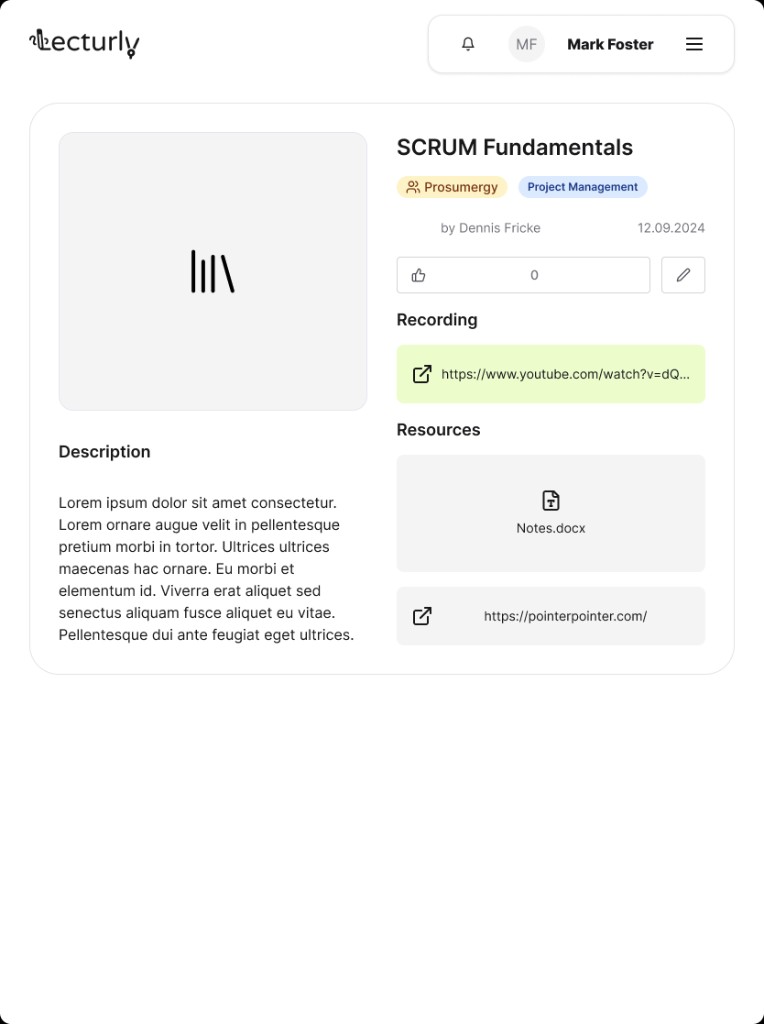
Before Lectur.ly became a web app, the entire experience lived inside Slack: a chat bot for adding topics, assigning lecturers, and rating presentations. When it worked, it worked — but it was unreliable. Core actions failed without warning, and users lost confidence fast.
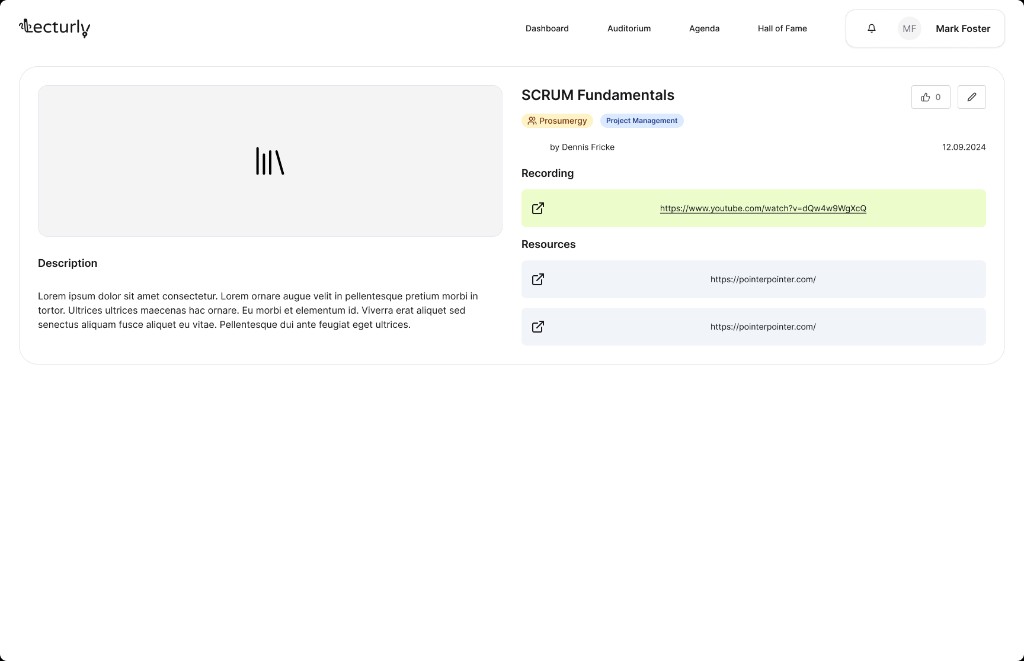
Navigation made it worse. The topics pool was nearly invisible — it was hard to tell which ideas were already queued. Scheduled talks were difficult to find. Summoning the interface meant typing `/lecturly` and hoping the bot responded. There was no archive of past sessions, and no convenient path to recordings except digging through the company drive or hunting for a calendar link.
Lectur.ly itself is a learning ritual: a colleague draws a random topic, gets one hour to prepare, then presents like an expert. The concept had traction. The delivery mechanism did not.